
Here is a quick reference you can use to embed more language or facilitate more language throughout your child’s day to support their communication growth.
Parents often wonder how they can help their child’s speech and language skills at home. Even a few minutes of intentional interaction each day can make a BIG difference.
At CB Speech Therapy LLC, I provide private-pay, in-home pediatric speech therapy in New Jersey, and I love empowering families with practical strategies they can put into effect immediately.
In this post, I’ll share 5 research-backed things you can do today to support your child’s language development.
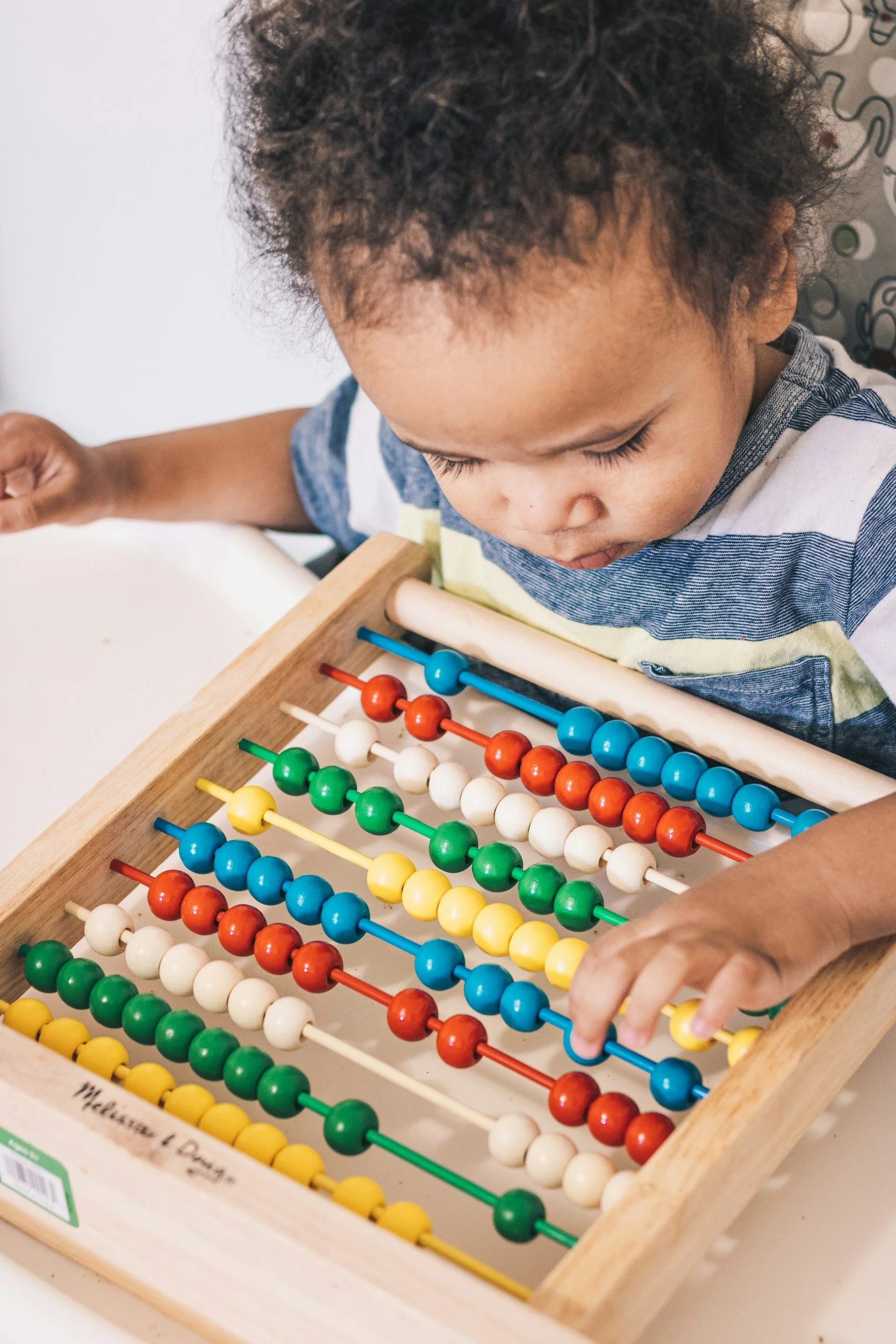
Talking To Your Child Throughout the Day
I know, I know. This one sounds like one we all already know. However, even a slight shift in how and how often we do this can have a big impact. What this looks like is:
Narration: Talk about what YOU (the grown-up, the caregiver) are doing. Making breakfast?
Example: “Mommy is pouring the juice in your cup!”
Description: of actions, objects, emotions. Describing things can go a LONG way. I also think it is an area of communicative function of language we often forget about that can take us a long way (i.e., when we do not know the label for something, we DESCRIBE it!).
Examples: “Wow! You chose the blue play doh!” “Oh, I see you are crying! You might be feeling sad!” “The dog is running fast!”
Use clear, simple language & emphasize words naturally
You do not have to reinvent the wheel here. Don’t worry about recreating a perfectly executed activity you saw that went viral on Instagram. Sure those can be fun, but simply reading with your child every day & playing with them intentionally daily can make the biggest difference. Even short 5–10 minute bursts during breakfast, bath time, or play can have an impact.
Reading together EVERY DAY.
Choose age-appropriate books with pictures and simple text.
Avoid quizzing your child. Reading should not be a test. It should be fun & about YOU modeling YOUR language. Rather than asking questions like “What is this?” and pointing to a familiar puppy in a storybook, try this: “I see the… (pause here, see if your little one says it, if not just keep going) puppy!”
Let your child turn pages and repeat words to encourage participation. Be sure to praise & encourage them when they do. That’s a win!
Research: Shared book reading supports vocabulary growth and comprehension (Whitehurst et al., 1994; Mol et al., 2008).
Expand on what your child is already saying
When your child says something, you responding reinforces that what they have said is meaningful. The best way children learn more language is you modeling how to add more to what they said.
Example: If your child says “car”, you respond with “Yes, the red car is fast!” This teaches sentence structure, grammar, and new vocabulary.
PLAY to encourage communication
You have heard it here before, and you will hear it here again… and again and again…
Children learn through PLAY.
Use toys, games, or everyday objects to create natural opportunities for language.
Pretend play (kitchen sets, dolls, cars) helps children practice vocabulary, turn-taking, and storytelling.
Ask naturalistic, open-ended questions: “What happens next?”
Research: Research Basis: Play-based language interventions are effective for toddlers and young children (Bruder, 2010; Fleury, 2016).
Respond and Encourage Effort
We want to celebrate ALL attempts to communicate, whether verbal, gestural, or via AAC.
Repeat & expand on their efforts to reinforce learning.
Keep a positive, low-pressure environment. Again, motivation is EVERYTHING.
Research: Evidence: Responsive interaction and reinforcement of attempts encourage faster language gains (McAllister et al., 2012; Law et al., 2017).
In Conclusion
Supporting your child’s language development doesn’t require any special materials or hours & hours & hours of structured activities. Simple, intentional moments throughout the day have a lasting impact.
At CB Speech Therapy LLC, I help families build these strategies into their daily routines while providing private-pay, in-home pediatric speech therapy in New Jersey.
If you’re ready to take the next step, contact me for a consultation, and we can create a personalized plan for your child’s communication growth.
Other Sources:
Huttenlocher, J., Haight, W., Bryk, A., Seltzer, M., & Lyons, T. (2010). Early language experience and brain development. Developmental Psychology, 46, 758–775.
Whitehurst, G. J., Falco, F. L., Lonigan, C. J., et al. (1994). Project Head Start: A model for shared book reading.Developmental Psychology, 30, 679–689.
Mol, S. E., Bus, A. G., de Jong, M. T., & Smeets, D. J. H. (2008). Added value of dialogic parent-child book readings: A meta-analysis. Early Education and Development, 19, 7–26.
Bruder, M. B. (2010). Play-based early interventions in speech and language development. Early Childhood Education Journal, 37, 303–310.
McAllister, L., Doolittle, J., & McCormick, K. (2012). Family-centered practices in pediatric speech therapy.Journal of Early Intervention, 34, 200–215.
Law, J., Garrett, Z., & Nye, C. (2017). The effectiveness of family involvement in speech and language therapy.Cochrane Database of Systematic Reviews.