
Spring is springing this week for New Jersey! When families ask how to support speech and language development at home, one of my favorite answers is simple: go outside and play.
Outdoor play naturally creates opportunities for communication. Children are moving, exploring, problem-solving, and interacting with their environment. All of these things support language development.
The best part? Many of the same activities can be utilized to support different areas of communication. For the purpose of this post, I’ll cover how the same outdoor activity can be used to support speech (the way we say words/sounds), language (vocabulary), and AAC (emphasis on core vocabulary words or the words we use 80% of the time across contexts).
Ball Play
Balls are incredibly versatile and create lots of natural opportunities for interaction.
You can practice:
turn taking
requesting
commenting
action words
Speech
Focus on practicing target sounds in simple words like:
go
pop
up
ball
Language
Model short phrases such as:
“ball go!”
“throw ball”
“my turn”
“your turn”
AAC / Core Vocabulary
Model core words such as:
go
stop
more
again
my
your
Pause before throwing the ball to create a natural moment for communication to happen.
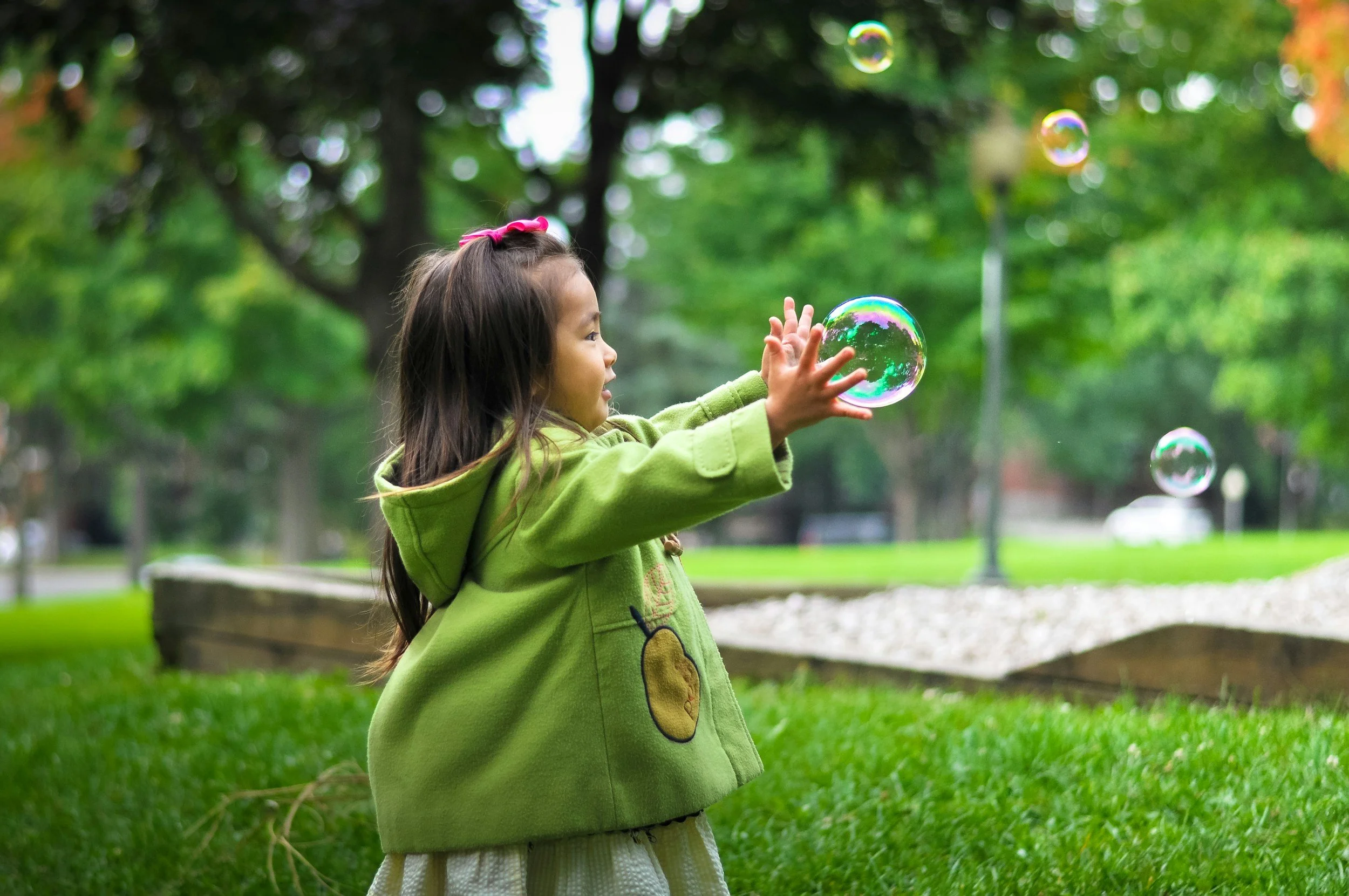
Bubble Play
Bubbles are a favorite for many children and naturally encourage requesting and joint attention.
Speech
Practice simple sounds or words like:
pop
more
bubble
Language
Model phrases like:
“big bubble!”
“pop bubble”
“more bubbles”
AAC / Core Vocabulary
Core words to model:
more
go
pop
look
up
Wait expectantly before blowing more bubbles to encourage communication.
Playground Adventures
Playgrounds offer endless opportunities for language.
Slides, swings, and climbing structures naturally encourage interaction.
Speech
Practice simple words related to movement:
up
go
down
Language
Model phrases like:
“go up”
“slide down”
“so fast!”
“again!”
AAC / Core Vocabulary
Core words to model:
go
stop
up
down
more
help
For example, pause before pushing the swing and wait for your child to communicate “go”.
Chalk Drawing
Sidewalk chalk encourages creativity and conversation.
Speech
Practice sounds during labeling:
sun
car
ball
Language
Expand on what your child draws:
“big sun!”
“draw more”
“blue car”
AAC / Core Vocabulary
Model core words such as:
more
make
look
big
little
Water Play
Water tables, sprinklers, or simple cups and buckets can create lots of opportunities for language.
Speech
Practice words like:
pour
cup
splash
Language
Model phrases such as:
“pour water”
“big splash”
“fill cup”
AAC / Core Vocabulary
Core words to model:
in
out
more
stop
go
The Power of Modeling
The most important strategy during play is modeling language without pressure.
Children learn communication by hearing and seeing it used during meaningful interactions. When we model words, gestures, or AAC consistently, we show children how communication works.
You don’t need to turn play into a structured lesson.
Instead, follow your child’s lead, stay playful, and focus on connection.
Supporting Communication in Everyday Moments
Speech and language development doesn’t only happen during therapy sessions. It grows during everyday moments, including simple outdoor play.
If you are wondering how to support your child’s communication development, or whether speech therapy might be helpful, I offer free initial consultations for families in New Jersey considering in-home speech therapy services.