
Why In-Home Speech Therapy?
When families begin looking for an SLP for their child, one of the first questions they often ask is: “Why in-home services?” or “Wouldn’t it be better ot be in a clinic?”
While clinic settings can be helpful for many children, in-home therapy offers a unique advantage: it allows support to happen right where your child naturally communicates, plays, and interacts every day.
Let’s talk some more about what that means.
Your Child’s Natural Environment Matters
Children learn best in familiar environments.
At home, your child already has access to their favorite toys, daily routines, & the people they feel most comfortable with. Because of this, therapy activities can be embedded into real-life moments instead of structured or therapist-made contexts.
A structured activity can be a lot of fun, and maybe even help get us some buy-in. It really depends on the child. However, we can work on communication during everyday things like:
snack time
playing with favorite toys
reading books together
everyday routines
These are the moments where communication naturally happens. Wouldn’t this mean they’re also the best places to practice it?
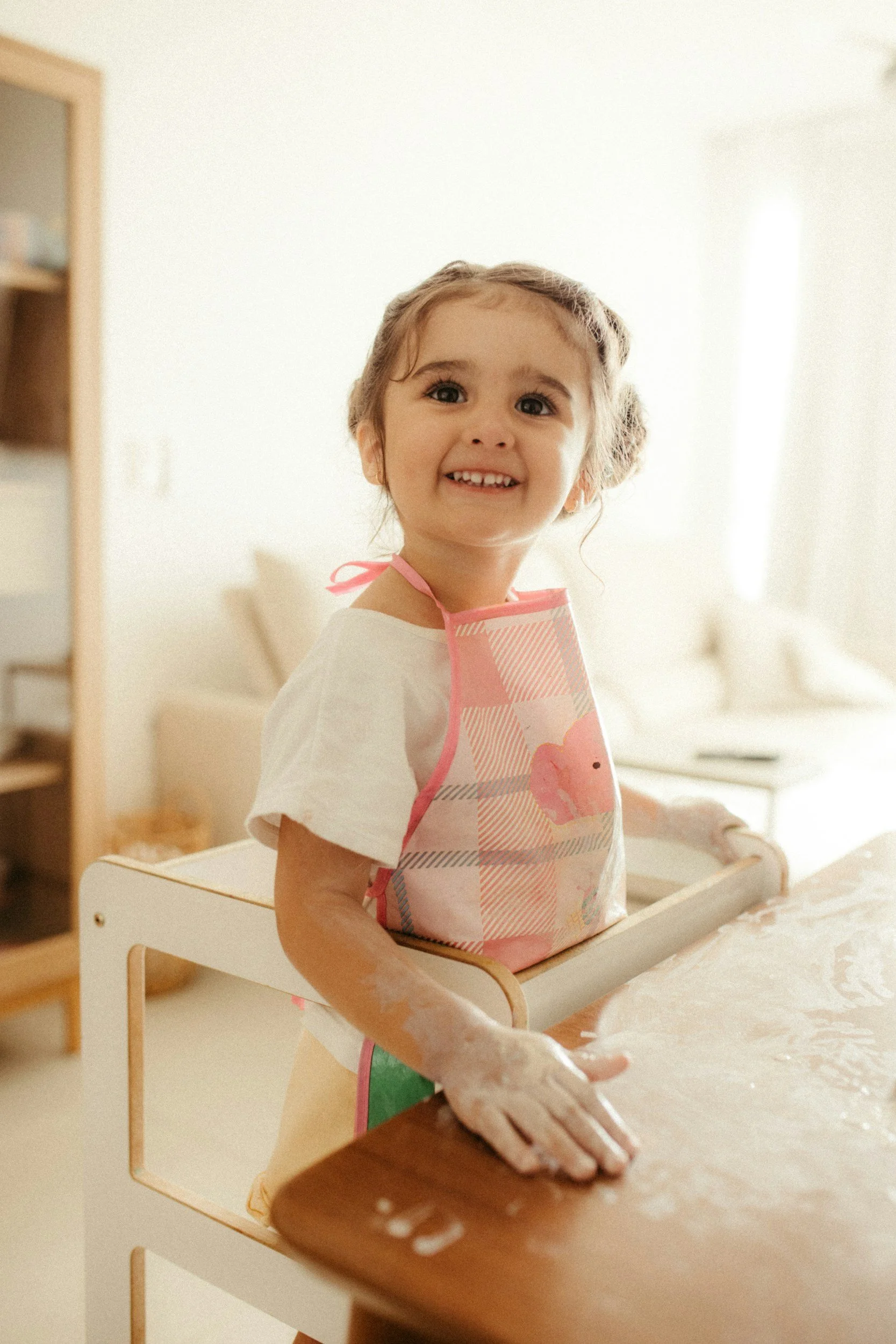
Therapy That Feels Like Real Life
In a clinic setting, therapy often happens with unfamiliar toys and in an environment that doesn’t exist outside the therapy room.
In-home therapy allows us to use what your child already loves and interacts with daily.
For example, we might:
use your child’s kitchen set to build requesting and pretend play
work on turn-taking with siblings
practice communication during snack time
model language strategies during your child’s favorite games
Because these strategies are practiced in the same environment where your child lives, they are often easier to generalize. (Ahem, that means working smarter & not harder for YOU!) With a speech therapist modeling that for you in your home during the session, ideally, you can carry over the same activity throughout the week.
Caregiver Coaching in Real Time
One of the biggest benefits of in-home therapy is the opportunity for caregiver coaching.
Parents and caregivers are the most important communication partners in a child’s life. When therapy happens at home, caregivers can see strategies modeled in real time and practice them during natural interactions with their child.
Instead of sending families home with instructions or worksheets, we work together (here’s that phrase again) in the moment.
This might look like modeling language during play, practicing strategies during daily routines, learning how to expand your child’s communication attempts, and adjusting activities to support engagement and regulation.
A Personalized Approach
Every home environment is different, and every child communicates differently.
In-home therapy allows services to be individualized in a way that reflects your child’s real life: their people, their interests, routines, strengths, and challenges. In-home services also allow therapy to be more collaborative and flexible.
Siblings may naturally join play, routines can be incorporated into sessions, and caregivers have the opportunity to ask questions and learn strategies that fit their family’s day-to-day life.
Because therapy happens in the spaces where communication matters most, the strategies we practice together are more likely to feel natural, sustainable, and meaningful…for you & your child!
Considering In-Home Speech Therapy
If you are wondering whether speech therapy might be helpful for your child, starting with a conversation can often provide clarity.
I offer free initial virtual consultations for families in New Jersey considering in-home speech therapy services.
Together, we can talk through your concerns, answer questions, and determine whether support may be beneficial for your child.