
It might feel early to think about summer plans in March, but when it comes to speech and language support, planning ahead can be incredibly helpful for families.
Many parents start noticing communication questions during the school year but wait until summer to explore additional support. By thinking about it now, you can make thoughtful decisions about what might best support your child during the months ahead.
Summer can be a wonderful time to focus on communication growth in a way that feels relaxed, flexible, and integrated into everyday life.
Here are a few ways a speech-language pathologist (SLP) might support your family this summer.
Reinforcing Communication Skills Outside the School Setting
For children who receive speech therapy at school, summer can sometimes mean a pause in services.
I think something to consider here is that this statement means regression can still happen. So if you are able to continue to work on it, why not work on it? A little bit goes a long way.
While many children continue to make progress during breaks, some families notice that skills are harder to maintain without consistent support. In NJ, children who qualify for Summer services are the students that their team predicts that they will regress no more than their peers on average.
Summer sessions can help reinforce skills your child has been working on throughout the school year, providing continuity and helping maintain momentum.
Supporting Language Growth Through Everyday Activities
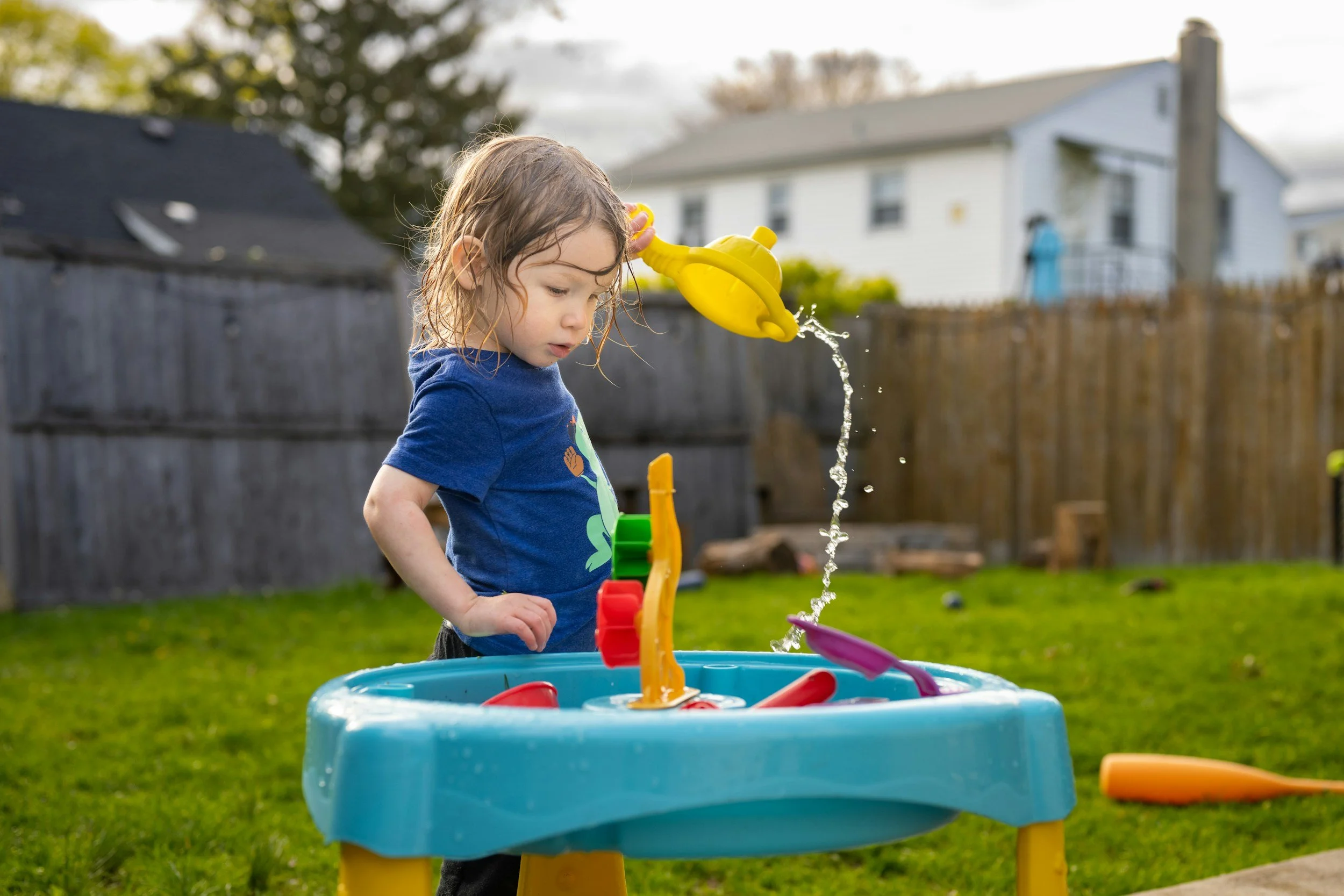
Summer routines often look different from the school year. There may be more outdoor play, family activities, and flexible schedules.
This actually creates many opportunities for communication development.
An SLP can help families learn how to support language during everyday moments such as:
outdoor play
reading together
family routines and activities
These natural experiences can be powerful opportunities for building communication.
Providing Caregiver Coaching
One of the most valuable parts of therapy, especially during the summer, can be caregiver coaching. The access to an SLP to support you that the busy school system does not always accommodate.
Rather than focusing only on the child during a therapy session, a private SLP can work collaboratively with parents and caregivers to model strategies that support communication.
This might include learning how to:
model language during play
expand your child’s communication attempts
support turn-taking and interaction
use visual supports or AAC systems
When caregivers feel confident using strategies at home, communication opportunities continue throughout the entire week.
Addressing Specific Communication Concerns
Summer can also be a good time to address specific communication goals that may not always be prioritized in school-based services.
For example, therapy may focus on areas such as:
early language development
articulation or speech sound production
social communication skills
AAC support
building confidence with communication
Without the demands of the school schedule, sessions can sometimes feel more flexible and individualized.
Preparing for the Next School Year
For some children, summer therapy helps prepare them for the upcoming school year.
This might involve strengthening communication skills, building confidence, or supporting transitions for children entering preschool or kindergarten.
Even a short period of focused support can help children feel more comfortable and prepared for new environments.
Starting the Conversation Early
If you have been wondering whether speech therapy might support your child, March can be a good time to start exploring your options.
Planning ahead allows families to ask questions, schedule consultations, and decide what type of support may be helpful before summer schedules fill up.
If you are considering speech therapy services for your child this summer, I offer free initial consultations for families in New Jersey to talk through your questions and discuss whether support may be beneficial.